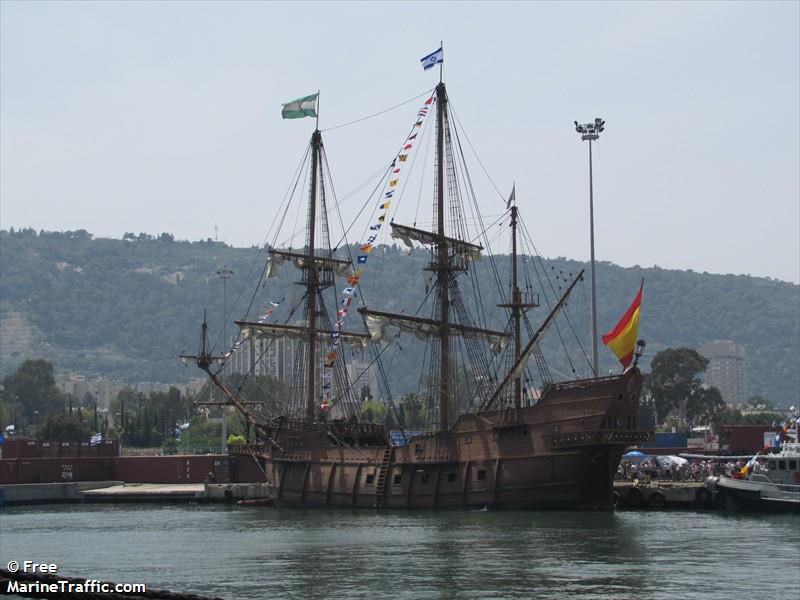
The idea of emigration, of starting over in a new place and building a new life, has always been in the background for me. I'd inherited the wanderlust gene from my dad's side of the family; all four of my grandparents had come from Europe to the US as children or young adults. It played out in our frequent moves around the US courtesy of my government job; in our cruising aboard Cinderella; and in retirement, in our musings about moving overseas for a few years just to experience something new.
As a kid, I wanted to grow up to colonize the moon or Mars. Why not? I was adaptable, I loved change and new things, and it seemed so possible in the optimistic years of the late 1950s/early 1960s. As a young adult I imagined myself living in London or Tel Aviv or Tokyo, but actually any time we visited any city anywhere for more than a few days I tried to imagine what it would be like to live there, learn a new language and new customs and a new way of making an ordinary life in the world.
What does that have to do with exploring Bremerhaven while the Galeon was docked there for the tall ship festival? Well, Bremerhaven, we learned, was one of the most important ports in Europe for emigration and shipping to the US and Canada, sharing the stage with Liverpool, Rotterdam, and LeHavre. We ate dinner one evening in the building that had been the shipping company offices, so it wasn't too surprising that there would be a museum dedicated to immigration here, delightfully named Wanderer House. I wasn't exactly sure what a museum of immigration would have to say ... but the intersection of the museum's thoughtful exhibits, my visit there in the context of El Galeon (itself a cargo ship and a ship that carried immigrant settlers to Spain's colonies in the New World), and my own family history, ended up giving me so many things to ponder. There were excursions beyond the stereotypical immigration story that I hadn't expected, and 6 months later I'm still thinking about it. Like the climate museum, this one let you walk through a journey, learning along the way.
 |
| Emigrants on the dock preparing to board the ship that would take them across the Atlantic. Image from the museum's website. This was one of the first exhibits you walked through as you traced the immigration journey. |
I think of modern-day immigration, friends who've moved to Mexico, Portugal, Spain, Germany, Netherlands or China for work or retirement. They do research to choose the place they want to go based on culture or climate or work opportunities or whatever. Then they do paperwork to get necessary visas, deal with money conversion, sort their possessions selling some and packing others, and finally get on a plane and go to their new home. But every one of those steps, isn't always the case.
The museum had you walk through exhibits that traced what I think of as the stereotypical immigration immigrant journey from Europe to the US, and it more or less follows those same steps. The "golden age" of this immigration would be in the late 1800s to early 1900s, boarding a steamship, arriving in New York, seeing the Statue of Liberty, processing through Ellis Island and then heading out, into the city or further afield, building a future and maybe a fortune, contributing to your new country. Some of the immigrants were fleeing war or persecution, but many in that time period were coming for economic advantage. The museum traced this journey, but at every stop, made you think about how many variations and exceptions there were, throughout history and up to modern days and even imagining an interplanetary future.
The exhibit also described the (in retrospect, rather racist) image of the ideal immigrants to the US -- a family from western Europe with lots of kids. The logic was that they would presumably integrate easily because their culture wasn't very different, and the large number of kids could populate the new country and contribute to the economy. The museum had small tableaus of what those immigrants might do once they settled that had a very New York City vibe -- work in a clothing factory, open a deli or a pub to cater to their fellow expats. I was startled to realize how this description could have been part of my own family history: educated and financially secure, they first sent their three 20-something sons to establish themselves, then the parents with their teenage daughter and adolescent son (my paternal Grandpa Jack) boarded a steamship and came to join them.
 |
| A plaque in the museum described this family from the Netherlands who brought lots of money and 11 children ranging in age from 19 to 3 as an example of a highly desirable type of immigrant to the US. |
 |
| This is the ship's manifest from the ship that brought my grandfather, originally from Bucharest, from LeHavre to New York in 1903 as a child (the family is highlighted in yellow). It notes that they can all read and write, and that they'll initially be staying with their older son who was already settled in the city. Great-grandfather's occupation is listed as shoemaker; my grandfather Jack became a lawyer. |
The "steamship journey" exhibits gave images of life aboard from first class to basic steerage. And here was where one of the first realizations hit me, deviations and exceptions to the standard immigrant story. The question has changed from "will I survive the trip?" to "will I be uncomfortable?" When we think of modern emigration, it's uprooting and unfamiliar and uncomfortable and inconvenient and possibly needing a new language, but you do assume you'd arrive alive, and could at least to some extent remain in connection with family and friends back home. Our friends who've emigrated describe frustrations with paperwork and bureaucracy, challenges of downsizing sentimental items, and logistics of all sorts -- but no physical fear of dying en route. But the assumption of arriving alive was not always the case. In historic times, the voyage itself could be fatal. In my Galeon tours, I describe the uncomfortable life on board for passengers who were hoping to settle in Spain's colonies in the new world. There was no canning or refrigeration, all the food was dried, pickled, or salted -- dried rice, dried beans, salt pork, whatever they could catch, biscuit. Water went foul after the first couple of weeks and there was barely enough for drinking, never mind bathing, and you were surrounded by 200 of your closest (illiterate and unwashed) friends. And that's just the uncomfortable part of the voyage. There were real dangers as well -- storms that they could neither predict nor outrun, starvation, scurvy, seasickness, pirates, bad navigation. Living to see the end of the voyage was by no means assured. In early years of modern emigration, say the early and mid 1800s, this trip was done by sail and could take almost as long as the crossing in Galeon times -- a month or so. By the steamship era, very late 1800s and early 1900s, just a couple of weeks. Although there were varying levels of comfort on these voyages, travelers expected to arrive alive, if somewhat the worse for wear. Sadly, in very recent times, we've retreated in some cases to the voyage itself being fatal -- think, for example, of people leaving war zones or desperate to sneak into another country without a visa. I've read of migrants riding the top (outside) of train cars in Mexico and getting scraped off the top when the train enters a tunnel, or walking across the desert at the border and dying of thirst, or as we saw in Dover, crossing the channel in an overcrowded and unseaworthy inflatable dinghy, and drowning before they could reach the coast.
 |
| One museum display was a recreation of life in the first-class section of a ship crossing the Atlantic ... |
 |
| ... while less-moneyed folks lived in rather more basic conditions. |
Luggage: what do you bring with you? If you only have a trunk, besides clothing and tools, what matters to you enough to dedicate some of your precious limited space to it? Family bible? grandpa's mandolin? a child's favourite toy? For us, moving from a large house to a small sailboat required some serious thinking about our relationship to our possessions, as did dealing with the estates of my parents and brother.. We've moved many times, and downsized and purged and streamlined, cast off things that we'd outgrown or didn't make sense with our lifestyle changes. Our friends who have moved overseas talk about power conversion, and things that it was cheaper to sell in the US and buy once they arrived than to ship. I think of my own priorities -- art and family heirlooms, antiques, vintage decor and kitchen items, favorite clothing and tools. As well there are practical things I had searched for to find the perfect fit and just, in my 70s, don't have time to trial and error for a replacement. If I had my 'druthers, I'd probably bring a fair-sized container. Some folks came with only a small suitcase, or for those who'd left hurriedly or desperately, even only what they were wearing.
 |
| 19th century trunks |
 |
| The museum had a whole exhibit hall of the things modern immigrants brought with them to Germany, and the stories behind them. Many of these people were fleeing conflict in the Middle East or Africa. Sentimental items, things that remind you of your lost or vanished home, the fundamental tools of your trade, religious items, were heavily featured. |
What do you do once you arrive? After clearing immigration, the museum suggested you might find work in a factory, or start your own business, or go west to farm, and had tableaus of these scenes from the 1920s-1930s New York.
 |
| This recreation of the deli in an immigrant neighborhood features familiar tastes of home. |
 |
| There was also a pub where people could meet up with their homesick countrymen. |
 |
| All the exhibits had tons of information about the people who would have been there. |
 |
| Many found work in factories; here, a garment worker. |
 |
| Or buy a train ticket to go further west. |
But people having the time and the opportunity to choose a suitable destination or even to choose to leave their homes at all, are far from the only story. What if you're displaced by war? What if your country no longer exists? As a teenager, my maternal grandmother was smuggled across the border from Russia when the Bolsheviks came to power. Her family had been fairly wealthy, but they came with what they were wearing, and little more. No choosing and no selecting and packing possessions -- they fled. I remember a conversation with some colleagues many years ago, when they shared stories of their family histories. When it was my turn, I said I was envious of them for having that connection to their history. I had no stories; my grandmother fled Russia and the family didn't bring their file cabinet. "But Jaye," my coworker Tim reminded me, "that is your story." My mother collected antiques. She said she wanted items that had a story and a history, even if that history wasn't hers.
What, btw, is "voluntary" emigration? Moving for economy is one end of the spectrum, and fleeing war/asylum is the other. What if there is no food? What if you cannot find a job to feed your children? If you have no choice but to migrate, although ultimately it is economic, is that "voluntary?" This was one of many questions the museum asked. There were whole galleries devoted to reflections on questions of modern immigration we passed through. Sadly, many of them were German only. Google Translate gave us the outlines of what was being discussed, but none of the nuance.
 |
| The catalog of immigration records hall |
The museum gave you the opportunity to select a real immigrant and follow their story. The one I drew at random was another example of my "typical" immigration success story: young couple arrives in the US in the early 1800s, goes west to farm in Illinois/Indiana, works hard, buys a small piece of land, has kids, the family continues to work, buys more land ... after several generations they're very comfortable and well established. Immigration success story. Then I looked at several more. There were numerous stories of German Jews who had left just before WWII, and gone to the US, Canada, or Israel. One haunted me. They were a couple, successful young doctors when the Nazi government revoked medical credentials for Jews in the 1930s. They emigrated, and while he found employment again in some medical-related field, the only work she could get was cleaning houses. For the rest of her life, she was never able to reenter the field she loved and had studied for. She had trouble picking up the new language and never really thrived in her new life. She was quoted as reflecting that in some ways she wished they had actually killed her instead of the meager life she lived after she lost her medical career. The museum described her story as a "failed" immigration. Of course, it was also a story of immigration not by choice. She was more than willing to stay where she had been -- but that society no longer existed.
In addition to the historical and present immigration exhibits, there was one hall that asked you to think about what it would be like to emigrate to Mars or the Moon, both from the imaginings of science fiction writers from the 1930s - 1960s, and actual modern technology. As a kid, going to the moon or exploring Star Trek style was most definitely on my agenda -- I even decorated my bedroom with what I thought a spaceship cabin might look like. So I was really hoping to spend some time exploring my adult reactions to the ideas. Sadly, this exhibit was only in German. Google Translate on my phone let me get a taste of it, but it was too clunky to do the entire (large!) exhibit hall.
 |
I was really disappointed that none of the text in the exhibit about the immigration of the future, to the moon or Mars, was in English! But here's a "rocket ship" cartoon from the era, when science seemed likely to open so many new horizons.
|
How are you changed by the place you move to? How do you, in turn, change that place? What if none of this is your first choice? What if you've moved not because you wanted to, but because you had to? I certainly left with more questions than answers, new understanding of just how broad the topic was and how far it ripples into society. In many ways I've always been more interested in where someone was headed to, than where they were from, but I've learned that those may be impossible to completely disentangle. I had new insights into my own grandparents, and new filters for explaining the El Galeon story.