Sunday, April 15, 2012

Work-Life Balance

Posted: March 26, 5:23 pm | (permalink) | (0 comments)


Here’s a popular concept -- balance -- that seems logical on the surface, desperately needed, yet I’m just not sold on it. Balance? Balance implies some good, some bad, some black, some white, and lots of shades of gray. Finding compromise between competing goals of how you spend your time, accepting some of what you don’t want. My image is a seesaw, “work” on one side and “life” on the other. Trade-offs and a zero-sum game. When one goes up, the other must go down. That’s not what I want in my life. Why do I want some bad, some gray? I want no bad, no gray. I want passion, exuberance, saturated bright colors. Instead of a “balanced life” I want what my former colleague Imogene Bynum called a “congruent life” – one where work life and home life point in the same direction, toward parallel goals. Doesn’t mean bad stuff won’t happen, and it doesn’t mean I won’t sometimes have to do work I don’t like. But I don’t want my goal to be “balance,” I want my goal to be “extraordinary.” What if I aim for mediocre, and fall short? Where am I then? “Aim for the moon,” the quote goes. “Even if you miss, you’ll land somewhere among the stars.”

My congruence has been water. It has been the thing my work, life, and play are organized around. When I had a career, it was all about various aspects of water – water pollution, water supply, water quality, floods and droughts and water law. Water was also what supported my home and my recreation; with living on the boat and sailing as recreation, I’ve been unusually aware of environmental concerns and how they affect my life afloat. 

But a vacation in Aruba last year was my first serious introduction to life under the water. My father, Mel Lindner, had been a pilot, and he’d often joked with us about navigation. He said that he had to think in three dimensions flying at various altitudes, while we in our boat were restricted to the surface of the water and only had two dimensions at our disposal. But going scuba diving changed that. Here was our third dimension, but it was down rather than up. We floated weightlessly in fantasy landscapes, and with weird creatures. Our guide, Manon Houtman, at a unique dive shop/pool/café called Aqua Windie’s, was an extremely competent and (patient!) instructor and tour guide, who became a friend in the time we were there. She was also a wonderful photographer; the stunning images here are all hers and I hope will give you a bit of a feel for what we experienced. Saturated colors and exuberance indeed! The t-shirt I brought back said it all – “same planet, different world.”Seeking the congruence of water in my not-balanced life afloat has given Dan and me access to new adventures that were magic far beyond our expectations.


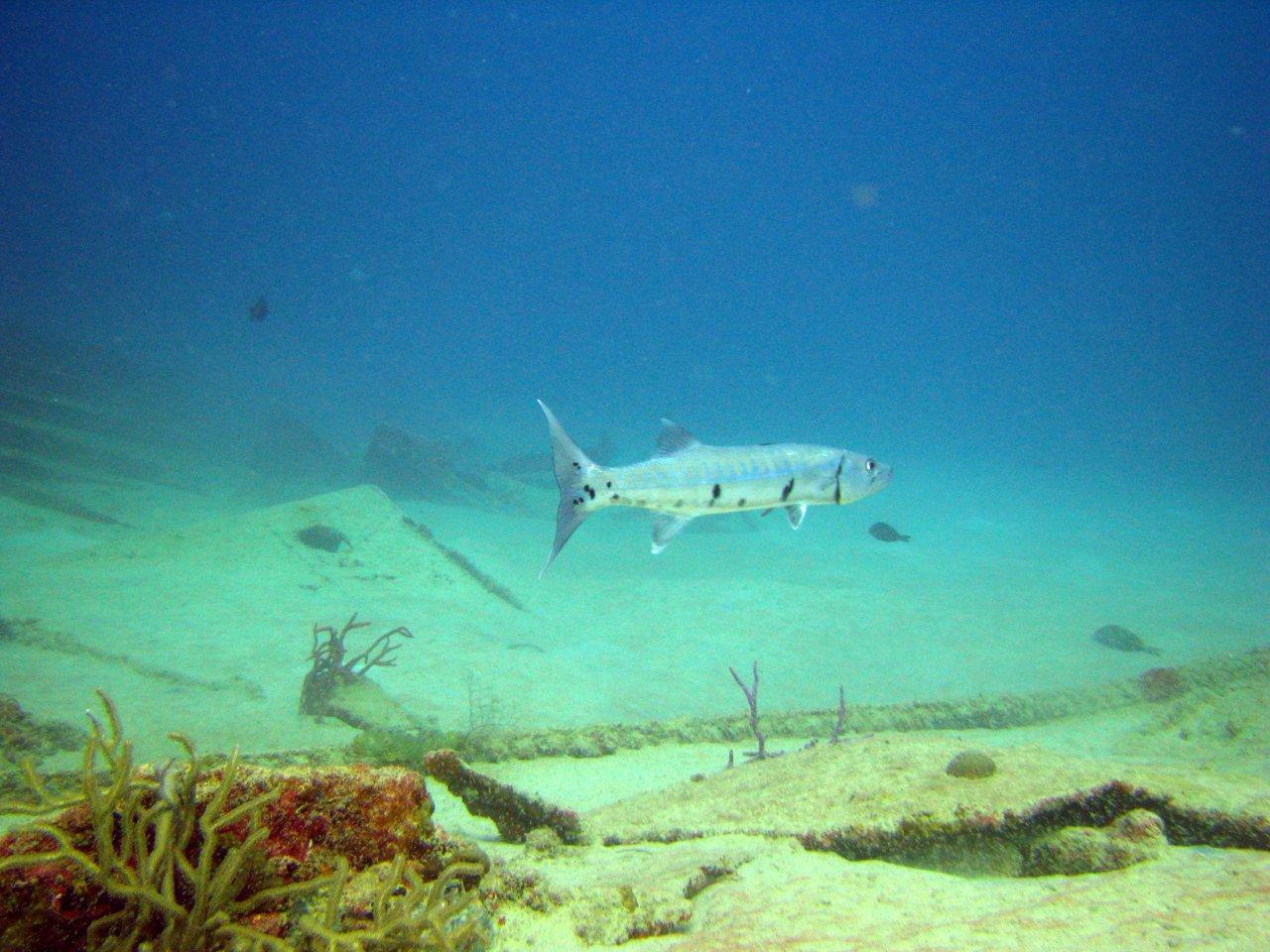


[All photos by Manon Houtman, 2011, and used with permission and my deepest thanx.]

= = = =

Like Life Afloat on Facebook!

Getting Around

Posted: March 19, 8:05 pm | (permalink) | (0 comments)

lacking a car when we travel by boat, we opted for a more playful form of transportation
One of the biggest adjustments we had to make when we started cruising was giving up our cars. Hard to imagine life in suburbia without a car, but it wouldn't exactly fit on the boat. It’s sometimes been a hassle, but there has been an unexpected financial benefit. I’ve read that the average cost of owning and driving a car in the US, including purchase, registration fees, insurance, fuel, and maintenance, is about $700 per month. Each month. Each car. Wow.

$700 a month can buy a fair number of taxi rides. We’ve learned to take the bus, and have gotten some insight into the life of people who can't afford that $700 per month and must rely on public transportation. It can be inconvenient, not getting exactly where you want, when you want. At the same time, we have met some interesting characters on the bus, that we’d never have met cocooned in the safety and isolation of a car, from the curly-haired guy with the parrot on his shoulder to the couple with the two-year-old so willful, and so energetic, that they had to keep her on a bright pink kid leash to keep her safe. When we really want to rent a car to explore the surrounding area, Enterprise has a fantastic deal for $10/day on weekends that we’ve taken advantage of numerous times.

But mostly, we’ve learned to walk, a lot. And that brings us to benefits number 2, 3, and 4. Good for the planet, good for my waistline, and, most of all, you get an interesting perspective on the city, perusing it at foot speed. Both Annapolis and St Augustine were laid out centuries before the invention of cars, and they’re scaled for pedestrians. Might as well explore them on foot, at an on-foot pace. The whole city changes, when you’re on foot. Instead of noticing things like parking spaces, traffic signs, you notice architecture, plantings, weather, even the texture of the pavement.

Some boats have space enough for bicycles. Generally, they use folding bicycles, made of marine-grade materials to be rust-resistant in the salt air of our everyday lives. At 33 feet, we don’t have even enough storage space to spare for that. Instead, we use folding scooters, driven by foot power, just like the one you probably had as a kid. Not only do they force us to go at a slow-enough pace to really notice our surroundings, but they are worth it just for the reactions we get from passers-by. It’s nice to help remind other adults that you’re still allowed to play even when you no longer write your age with a single digit!

The light-colored pavement I'm scootering on in the photo above isn't made of concrete; seen up close, it's lots of tiny seashells. Not to minimize the comfort and convenience of a car, but no way would I ever have noticed this interesting pavement, or gotten this up close and personal, had I been driving!

On a boat, storage is everything. Here, the scooter collapsed and ready to pack away


= = = =


Like Life Afloat on Facebook!

Cost of Living ... Afloat

Posted: March 10, 10:26 am | (permalink) | (0 comments)


I love the conversations we get into when we tell people we live on a boat, year round, without a house or lots of “stuff.” Some people are amazed, some are clearly baffled, some ask practical questions, some shyly share their own dreams of freedom from the rat race. But some skeptically give us some version of “must be nice,” implying that only someone with lots of money would be able to buy a boat big enough to live on, much less travel in. There’s a cynical joke among boaters, when asked how much it costs, to say, “as much as you have.”

How much does a car cost? If you’re thinking, “new Mercedes from the dealership;” and I’m thinking, “used Chevy from Craigslist;” we aren’t going to be able to have a very productive conversation about the cost of cars. And it’s the same with living on a boat, just as it’s the same with the cost of the boat itself. How big? How new? What kind of amenities? You really need to know yourself pretty well to come up with a sustainable budget because you need to understand what creature comforts you require to keep it from feeling like you’re camping out instead of living at home. Bear in mind that there’s no right answer here. You don’t get extra points for living an unnecessarily Spartan lifestyle. But that definition of Spartan varies also. What you think is a luxury, I can’t imagine life without, and vice-versa. Like any other budget, land or water, it’s really about distinguishing between “wants” and “needs.” Having said that, understand that I can’t tell you what living on a boat and cruising would cost you. I can only tell you what it costs me.

So here’s what living on a boat and traveling costs the two of us in the southeastern US: on average less than $2500 per month. That doesn’t include the purchase of the boat itself or our medical insurance, and we don’t have a car.

$500 boat maintenance -- conventional wisdom in boating circles is to budget about 10% of the boat’s value for both long-term maintenance and periodic replacement of major systems like sails or engine; as well as annual upkeep like painting.

$400 food and sundries – everything we buy in the grocery store, including shampoo, sunscreen, cleaning supplies etc.

$100 drinks – booze really should be part of our entertainment budget, instead of a line item, right?

$200 communications -- includes two cellphones, internet service, and a mail-forwarding service so perfectly suited to our needs that it deserves a post of its own. If your mail-forwarding service is provided by a family member and you are content to catch free wifi hotspots instead of having an actual data contract, you will pay much less. I pretty much demand reliable internet; lacking it is my feeling of “camping out” – fine for a weekend, but not something I want for every day of my life.

$150 boat insurance -- varies according to your cruising area, your experience & record, and of course, the value of the boat. Ours requires us to stay north of the Florida line from June to November (hurricane season) or the rates go up. Way up.

$1000 marinas + fuel + entertainment -- At first glance, it seems somewhat odd to lump these 3 together. When we’re traveling a lot, making a lot of miles during the trips north in the spring or south in the fall, fuel can cost us $400-$500 per month. But then, during those traveling months, we aren’t staying in marinas very much. Nor do we go out much in the evenings; we’re just too tired. When we’re staying in one place, our marina costs and entertainment costs may go up, but we’re not paying for fuel. So it more or less averages out. For marina costs, the places we like to stay average on $2 per foot per night when we’re just staying a night or two (varies by location and amenities, but you can see the advantage of living on a smaller boat when paying by the foot!) or $15-$20 per foot per month for longer term (again, varies by location and amenities). Entertainment is generally books, museum and event admissions, dinners out, occasionally renting a car to explore the local area.*

$150 misc. -- includes taxis, laundry, clothing, all the other odds and ends of life. If the clothing budget seems small, remember that in this cruising life, you really don’t need much in the way of fancy clothes. I can go months between occasions that call for something more formal than a polo shirt and chinos!

= = = =

* Addendum:  Wise commenter "Chuckles" pointed out that this $1000 is flexible up or down.  You can spend less: you anchor out instead of staying at marinas; cook aboard instead of going to restaurants; read books or play board games instead of going to events; walk, bike, or bus instead of renting a car.

Like Life Afloat on Facebook!

Nothing To Report

Posted: February 29, 3:34 pm | (permalink) | (0 comments)

barge [photo: barge and backhoe; the view from the cockpit down the (very looong) slip we're in]

The tidal range here in St Augustine is 4 – 5 feet, and well, all that water has to gosomewhere when it ebbs. Where it goes, is out the inlet, and because the inlet is small, the water goes very very fast. The current can be intense, 4 knots at maximum ebb. (For comparison, the tidal range in Annapolis is only a gentle 1 foot, and currents are only rarely even as much as 1 knot.) We can only motor at 6 knots with the engine, which means that when the current here in St Augustine is at its strongest, we can’t move against it, we just have to wait it out. When boats come into the marina unawares and try to dock without accounting for the current, it can get … interesting. The current can push the boat off course, making it difficult to get into or out of the slip or stay centered in the fairway. You can get a lot of insight into personalities by how people respond to these surprises. Some yell, some curse, some panic, and some merely abort the attempt, learn from it and try again. Sometimes we just sit in the cockpit and watch the docking drama; it’s like free entertainment. I feel sympathy for the commercial tour boats on the dock that have to come and go by the scheduled departure time no matter what the current is doing. Recreational boaters like us, who have the luxury of time, just wait for slack tide when the maneuvering is easier.

But that fast current also shifts and changes the shape of the inlet – so much so that the original Spanish colonists called the entry the “Crazy Banks” because it was so unpredictable. In modern times, that shifting and depositing of sediments clogs structures that don’t shift, like marinas … so periodic dredging is needed to keep the slips deep enough for the boats to get in and out. They float a backhoe on a barge into the right location in the marina, and dig up bucketloads of stinking muck to be carted away. We watched dredging begin last week and saw the crazy current catch the barge, laden with tons of muck, and push it off course to crash into a slip next to ours. Yikes! That could have been our boat in there! Maybe it was karmic revenge for all the times we’ve watched and smirked at boats who were having trouble with the current, but this was waaaay too much docking drama for me!

Compounding my concern, we were going to be gone for a bit. All night I had visions of coming back to find our boat crushed, ruined by a wayward barge. The marina’s pretty empty right now, it’s the quiet season, so the sympathetic manager allowed us to move the boat to a more out-of-the-way slip, although it is also rather too big for our boat. (Those who know our location in our Annapolis marina, may wonder if grossly-oversized slips are a kind of trend for us. Not by choice, but sometimes it just works out that way. In the Annapolis case, our big slip was the only one available at the time with a full finger pier on the outside of the marina.) Currently in St Augustine, the slip we’re in is even bigger than the Annapolis one. Here’s little s/v Cinderella, 33 feet long, tucked into a slip designed for a boat twice her size – rattling around in a 62-foot slip with no one on either side of her. Looks kind of ludicrous, and a bit lonely, but I slept much better with the near-certainty that no one and nothing was going to damage our home while we were gone. We even got an email from the marina manager while we were gone with the subject line “nothing to report;” assuring us that there had been no further incidents with the barge and our boat was just fine. Hmmm. You would think that a blog writer with “nothing to report” would be frustrated at the prospect of a blank page and casting about anxiously for some subject to write. But in this case, “nothing to report” suits me just fine!

= = = =

Like Life Afloat on Facebook!

Rest Easy (at least for now) You Know Where You Are)

Posted: February 15, 4:22 pm | (permalink) | (0 comments)

Remember the controversy about GPS I wrote about last July? That there was a new company hoping to provide broadband service ... but their proposed spectrum would interfere with GPS used for everything from the military to your car's GPS to (gasp!) our boat's chartplotter? From this article, or this one, it looks like FCC has quashed the proposal indefinitely. Works for me; given the choice, I think it is more in our national interest to have reliable geolocation service, than for more people to be able to quickly upload their home YouTube videos.